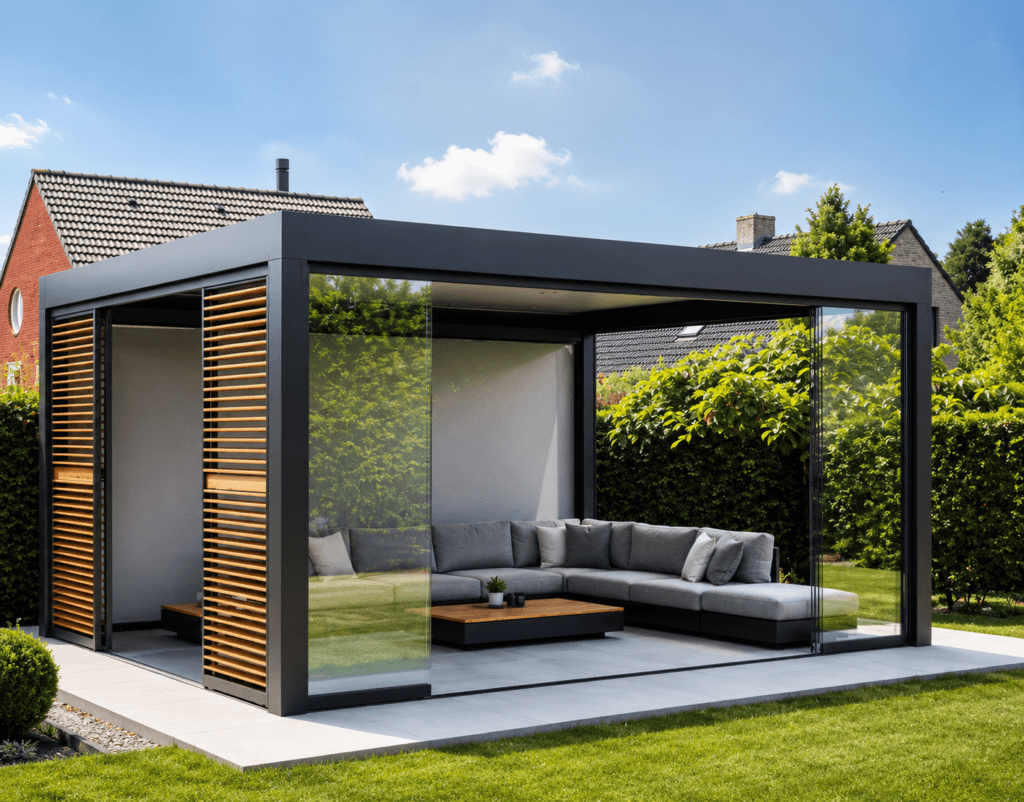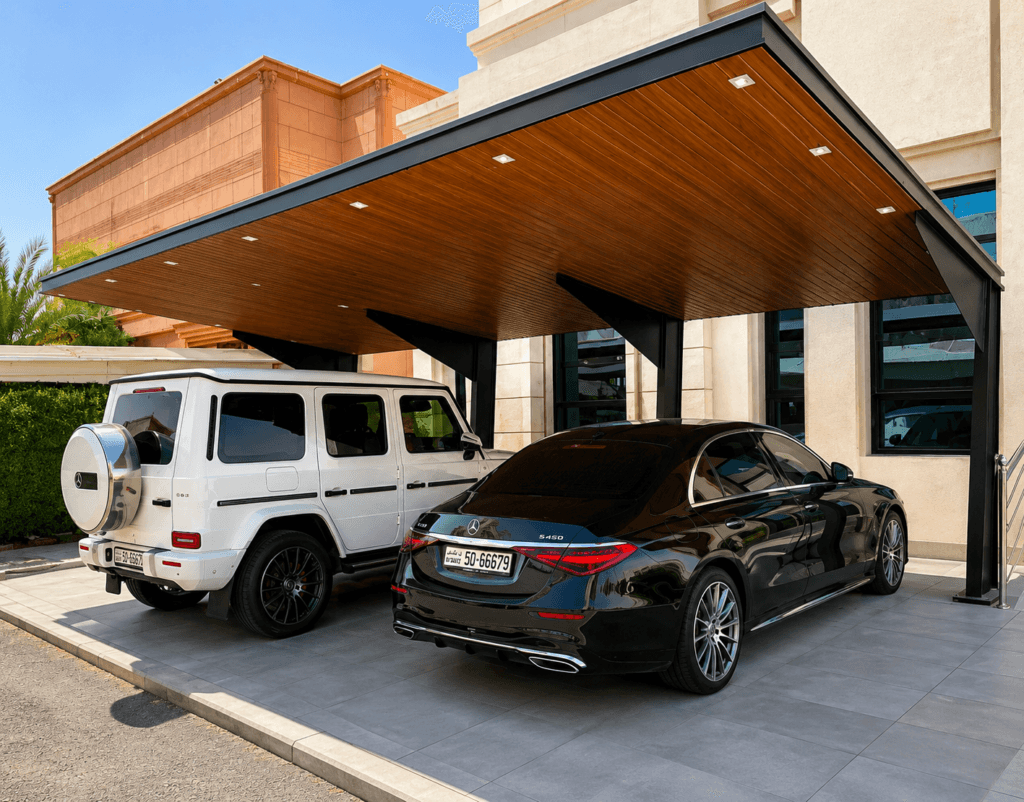
Some shade materials look fine for a season and fail by the next summer. PVC and shinko shades solve that problem with roofing built specifically to block sun, shed dust, and survive Kuwait’s temperature swings without cracking. In 2026, more businesses and homeowners across Kuwait are choosing these materials over basic fabric or thin sheeting, precisely because they hold up under real conditions instead of just looking good in a showroom. This guide explains the difference between PVC and shinko roofing, where each performs best, what installation and pricing typically involve, and how to choose a contractor who understands these materials rather than treating them as generic sheeting.
PVC shading uses flexible, UV-stabilized sheeting stretched over a frame, while shinko refers to corrugated galvanized steel panels commonly used for solid roofing. Both materials block sun completely, unlike open lattice or fabric alternatives.
This matters in Kuwait because intense summer sun and blowing sand demand roofing that won’t degrade within a year or two. PVC and shinko both resist UV breakdown and dust buildup better than standard fabric, making them practical for carports, walkways, and storage covers that need full protection. You can view completed installations on our services page or browse finished PVC and shinko projects on our projects page.
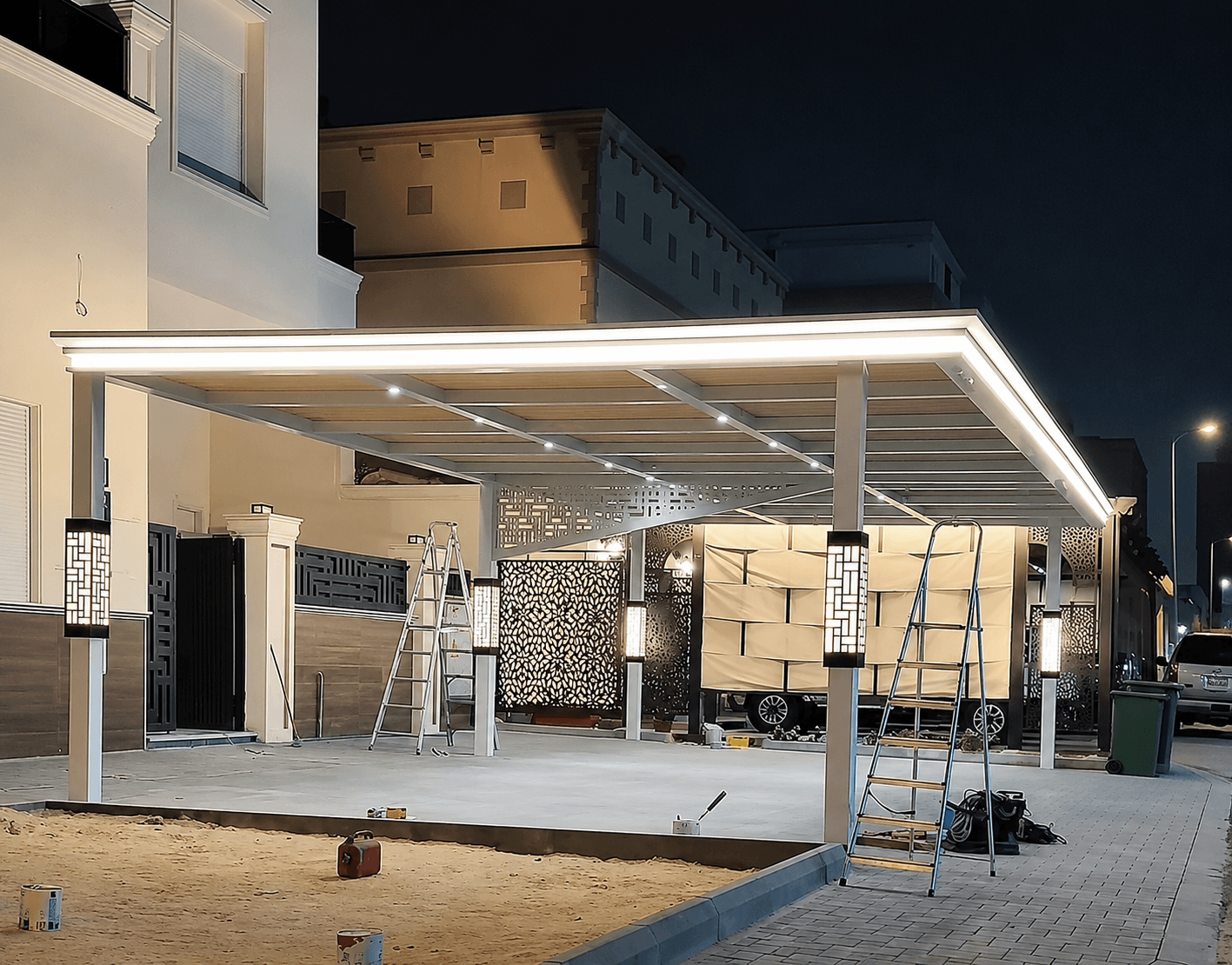
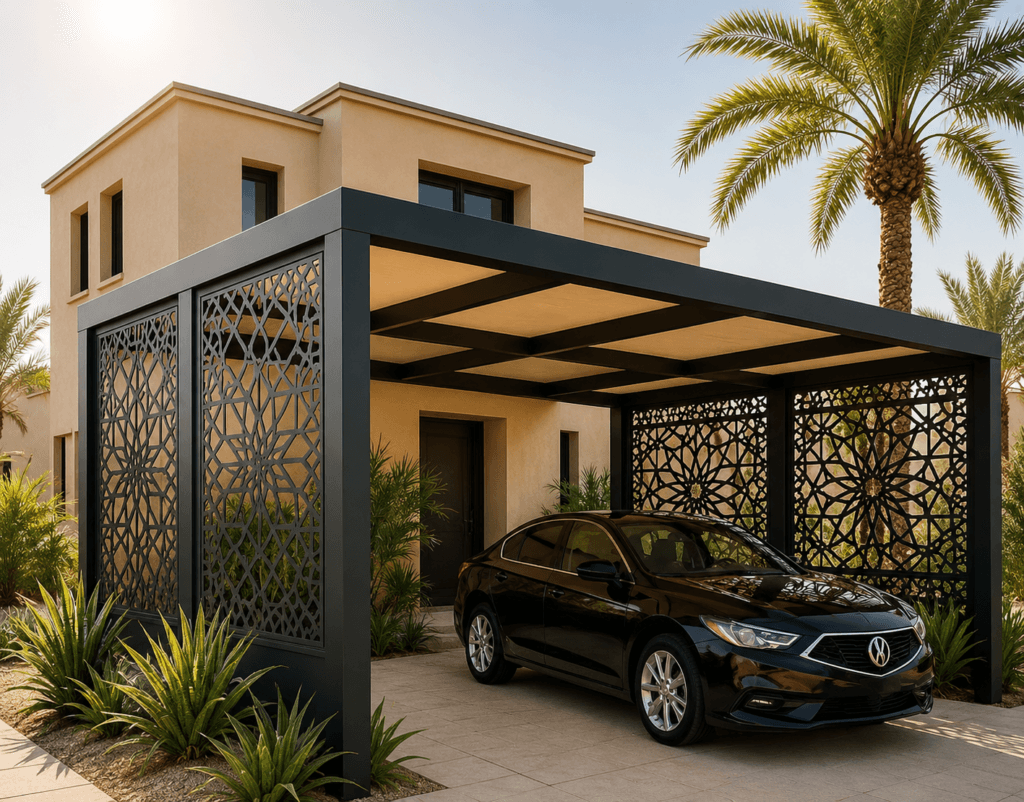
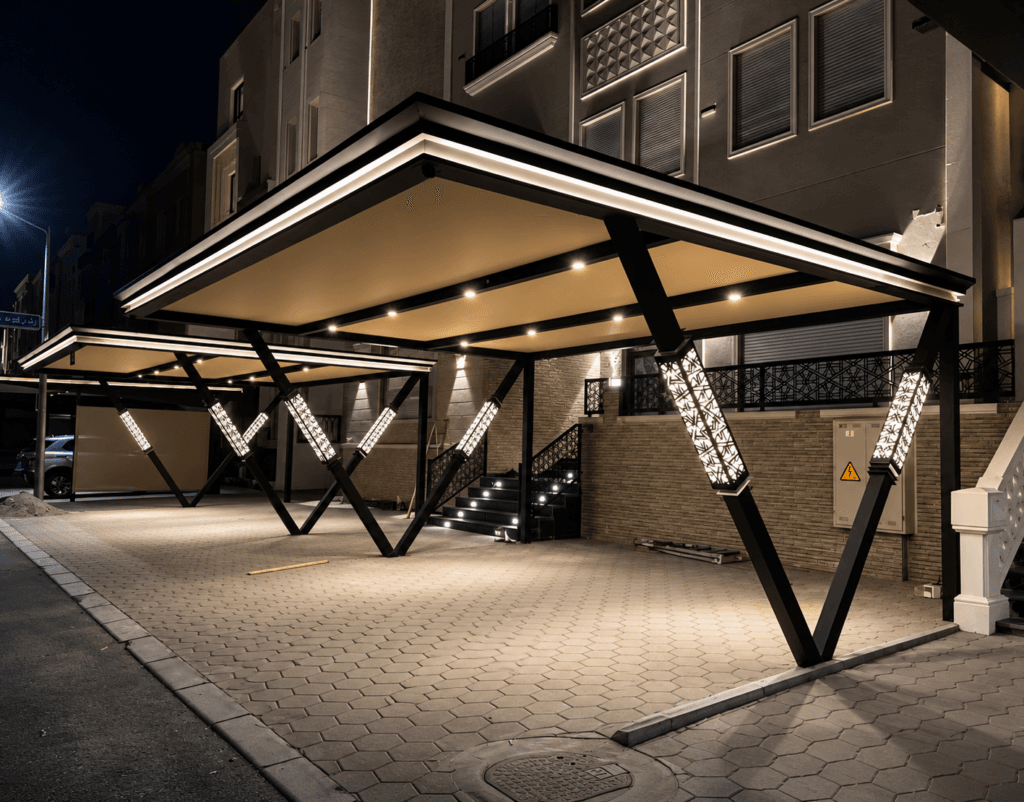
Flexible PVC roofing over vehicle parking blocks sun and dust while staying lightweight on the frame. This suits villa driveways and single-vehicle parking spots. Browse examples on our projects page.
Corrugated shinko panels give a rigid, fully solid roof for larger structures like warehouses or storage sheds. The galvanized coating resists rust better than untreated steel sheeting.
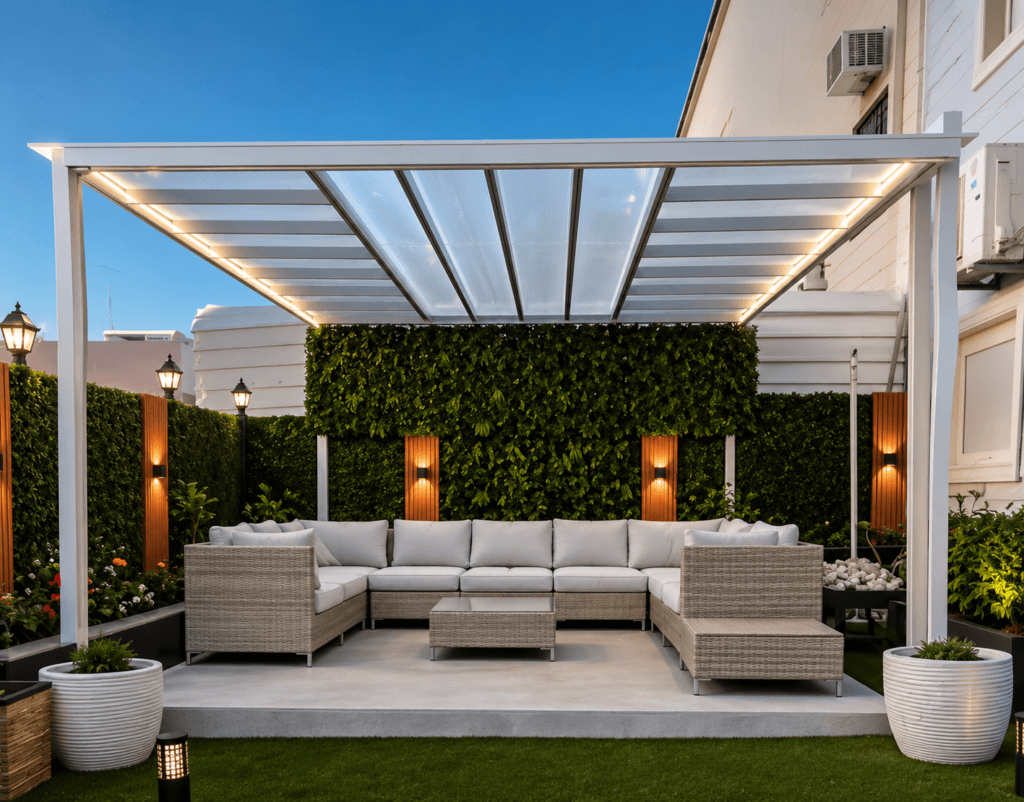
Lightweight PVC roofing over walkways protects pedestrians from direct sun between buildings or parking areas. It installs quickly compared to heavier steel alternatives.
Businesses use shinko roofing for outdoor storage areas needing full weather protection. The solid panels handle heavier loads than PVC, useful for stacked materials or equipment.
Some projects use shinko for the main roof span and PVC for side panels or partial coverage. This balances rigidity with flexibility depending on the structure’s purpose.
For PVC and shinko shades built to handle Kuwait’s heat, sand, and humidity, Haddad Muzallat combines material expertise with two decades of local fabrication experience.
Learn more about our background and team on the About page.
| Feature | Haddad Muzallat | Typical Competitor |
|---|---|---|
| Years of Experience | 20 years, since 2004 | Often under 5 years |
| PVC UV-Grade Transparency | Disclosed and documented | Rarely specified |
| Completed Projects | 600+ documented | Rarely disclosed |
| Shinko Coating Options | Galvanized and Galvalume | Basic zinc coating only |
| Seam Sealing Standards | Documented sealing process | Often inconsistent |
| Written Warranty | Provided in contract | Verbal only, often unclear |
| Response Time (WhatsApp) | Same-day replies | Delayed or inconsistent |
| Coverage Area | All six governorates | Limited to nearby areas |
| Pricing Transparency | Itemized written quotes | Vague lump-sum estimates |
| After-Sales Support | Ongoing maintenance available | Often ends after installation |
External Reference: The Public Authority for Applied Education and Training (PAAET) offers useful background on Kuwait’s construction training standards and certified metalwork practices. For a wider look at the country, Visit Kuwait has a worthwhile overview.
Someone searching for PVC or shinko shades in Kuwait is usually comparing material durability, checking rough pricing, or looking for a contractor who installs quickly near their area. Some are early-stage, deciding between PVC and shinko for a carport or storage cover; others already have measurements and want a fast WhatsApp quote. This guide covers both — the material background needed to decide, and the practical steps to get a contractor started.
Demand for PVC and shinko roofing spans Kuwait’s residential and commercial zones, from villa driveways in Salmiya and Fintas to warehouse and storage areas in Shuwaikh and Sulaibiya. Coastal humidity near Fahaheel pushes many buyers toward Galvalume-coated shinko over basic zinc coating, while inland areas like Farwaniya and Jahra deal with more direct sun and dust, making heavier PVC grades a practical upgrade. Wherever the site sits, material selected for Kuwait’s specific conditions outperforms generic imported roofing by a wide margin over time.
Note: The figures below are general cost drivers only, and actual pricing will change based on your specific requirement — request a quote for an accurate figure.
| Cost Factor | Impact on Price |
|---|---|
| Material choice (PVC vs shinko) | Shinko generally costs more but offers a fully rigid roof |
| Coverage area size | Larger spans need more material and stronger framing |
| PVC UV-treatment grade | Higher-grade UV protection adds to the base material cost |
| Shinko coating type | Galvalume costs more than standard zinc coating |
| Site accessibility | Remote or tight-access sites raise installation labor cost |
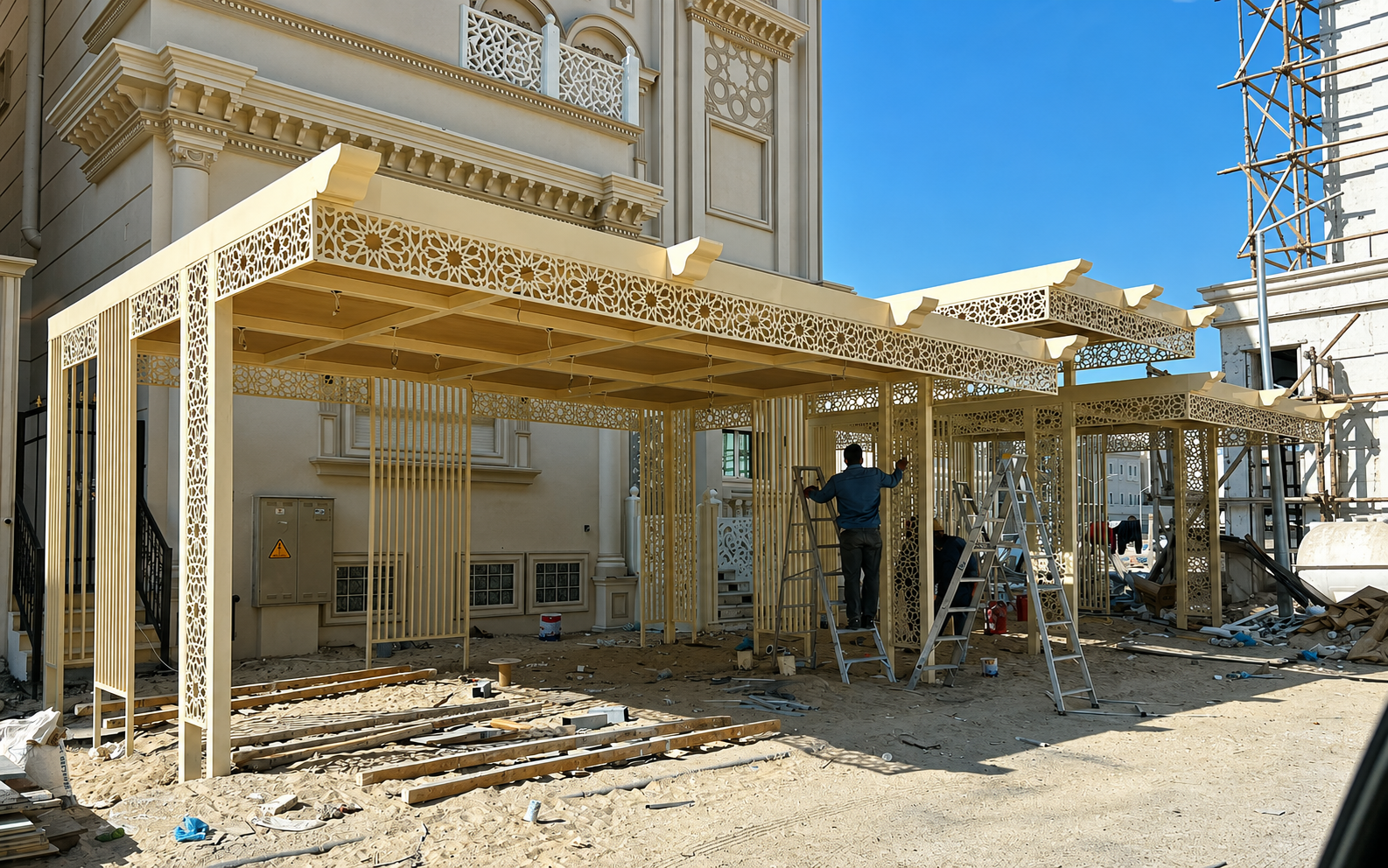
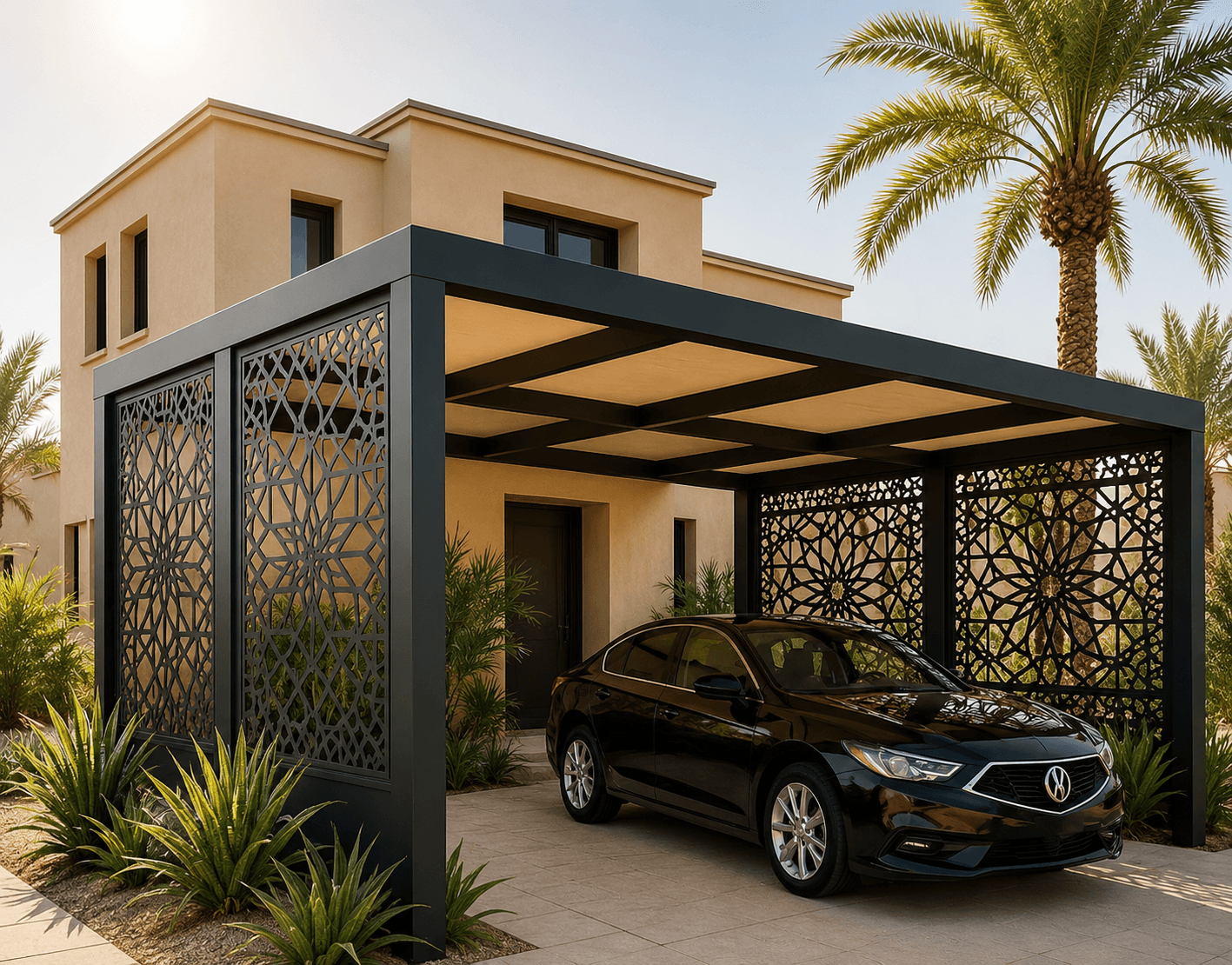
PVC is a flexible, UV-treated sheeting stretched over a frame, while shinko is a rigid, corrugated galvanized steel panel. PVC works well for lighter structures like carports and walkways, while shinko suits larger spans needing a fully solid roof. Both resist Kuwait’s sun and dust effectively when properly specified.
Shinko generally lasts longer structurally, since galvanized steel resists physical wear better than flexible sheeting. However, high-grade UV-stabilized PVC can perform well for many years too, especially in lighter-duty applications. The right choice depends on load requirements and how the structure will be used.
Metal roofing does absorb heat, but proper insulation or an air gap under the panels reduces this significantly. Lighter panel colors also reflect more heat than dark finishes. For living spaces, adding insulation backing is worth discussing with your contractor during the design stage.
Yes, when seams are properly sealed and the sheeting is tensioned correctly. Poor sealing is the main cause of leaks during rare rain events, not the material itself. A contractor experienced with PVC installation will address seam quality as part of the standard installation process.
Both require periodic dust removal, since sand buildup accelerates wear on either material. Shinko needs occasional rust-spot checks near coastal areas, while PVC benefits from seam inspection before the rainy season. Overall upkeep is minimal compared to wood or untreated metal alternatives.
Choosing the right contractor for PVC and shinko shades in Kuwait comes down to material grade, honest coating specifications, and a team that understands local weather demands. A properly installed roof protects vehicles, storage, or walkways for years without constant repairs. Haddad Muzallat — حداد مظلات الكويت — has spent 20 years working with exactly these materials for Kuwait’s climate. Reach out on WhatsApp or visit our site to start planning yours.
Ready for a Professional PVC & Shinko Shades Consultation?
Contact Haddad Muzallat Kuwait today — WhatsApp Us | Call +965 9887 2914 | Get a Free Quote Online →